
Essay · Pillar II — The Human Image
Clay to Code: The Evolution of Human Identity
God formed humanity from the dust of the ground. Now, we're allowing ourselves to be formed from the dust of data.
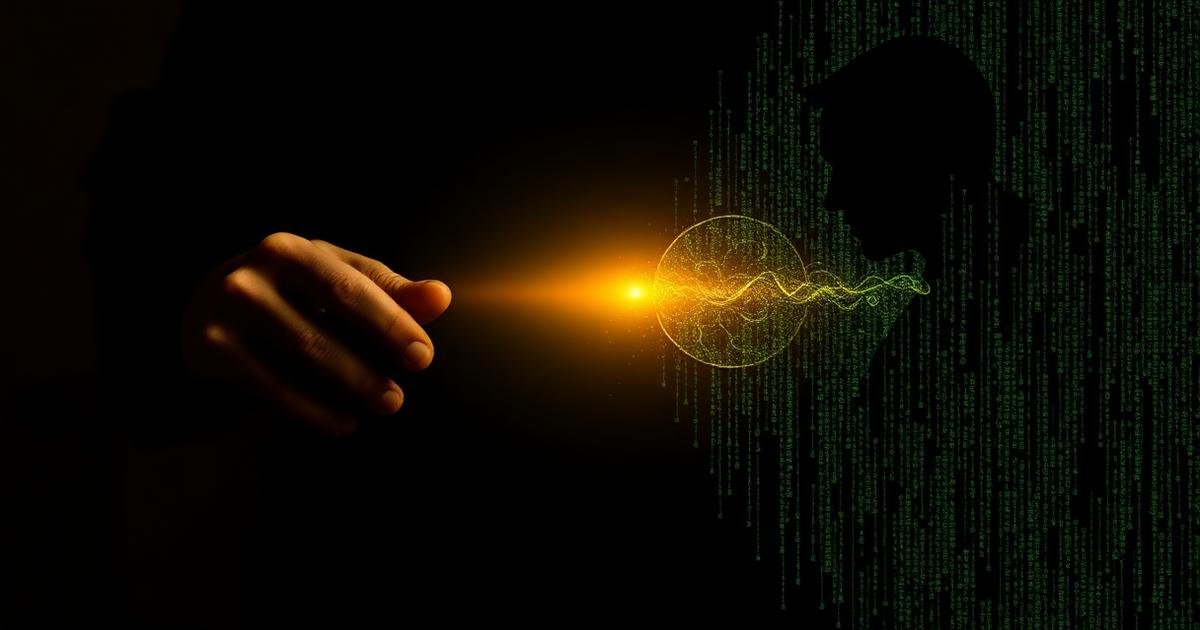
In Genesis Chapter 2, God does something very human-like: He gets to work, he gets His hands dirty. "The Lord God formed the man from the dust of the ground and breathed into his nostrils the breath of life" (Genesis 2:7). The Hebrew word for "formed," yatzar, is the same word used for a potter shaping clay. It's intimate, tactile, personal. God doesn't just speak humanity into existence; He moulds us.
Fast forward a few millennia, and we're still being shaped — but now, the potter is often an algorithm.
The Potter's Wheel of the 21st Century
Today, our identities are shaped by data. Every click, purchase, and social media interaction is a piece of clay on the potter's wheel of AI. And just like clay, we're malleable. The ads we see, the news we read, even the people we're connected to online are increasingly determined by systems designed to predict and influence our behaviour.
But there's a crucial difference between the divine potter and the digital one. Because God's shaping of humanity is an act of love. Love for his own creation. Not as something which he can later sell for money, but as something that he has created in order to love.
The potter in Jeremiah 18:4-6 reshapes the clay when it's marred, but the goal is always restoration. Algorithms, on the other hand, shape us for efficiency, profit, or control. They don't care if we're flourishing; they only care if we're engaged.
The Myth of Self-Creation
We like to think we're the authors of our own identities. The modern mantra is "Be yourself" — as if the self is a fixed, autonomous entity we can simply choose to express. But the truth is, we're always being shaped by forces beyond us: culture, family, language, and now, technology.
The philosopher Charles Taylor calls this the "social imaginary" — the unspoken assumptions that shape how we see the world and ourselves. In the digital age, our social imaginary is increasingly coded. Our sense of self is mediated by platforms that reward certain behaviours and punish others. We're not just using technology; we're internalizing its logic.
And yet, the biblical story offers a radical alternative. In Genesis, humanity isn't a self-made project. We're a collaboration — God's breath in earthly clay. The Imago Dei means that our identity isn't something we create from scratch. It's something we receive and at some point in our lives, discover for ourselves.
The Limits of the Digital Potter
Here's the problem with letting algorithms shape us: They don't understand the clay. They've never got their hands dirty as we have had to.
A potter knows the properties of clay — its strengths, its limits, the way it responds to pressure. But AI doesn't know us in this way. It only knows our patterns. It can predict what we'll buy, but it can't understand why we weep at a funeral. It can recommend a song, but it can't grasp the meaning of the lyrics.
In the Gospel of John, Jesus says, "I am the good shepherd. I know my own and my own know me" (John 10:14). The Greek word for "know" here is ginosko — a deep, relational knowledge. It's the kind of knowing that comes from presence, not data. Algorithms don't ginosko us. They aggregate us. To exploit us.
Reclaiming the Potter's Touch
So how do we resist the digital shaping of our identities? Not by rejecting technology entirely, but by remembering the original Potter.
Seek Faces, Not Just Feeds
Algorithms thrive on abstraction. They reduce people to data points. But the Imago Dei is embodied. It's in the wrinkles of an elderly person's face, the laughter of a child, the tears of a friend. Spend time with people in unmediated ways.
Create, Don't Just Consume
God is a creator, and we're made in His image. When we create — whether it's art, music, writing, or even a meal — we're participating in the divine act of bringing order to chaos. Algorithms can generate content, but they can't create meaning. That's our job.
The clay that never sets
The clay doesn't resist the potter. It trusts the hands that shape it.
In the digital age, we're being shaped by many hands — some gentle, some greedy, some indifferent. But the original Potter is still at work, continually tending and caring for his clay. The question is: Whose hands will we allow to shape us?
Continue the conversation
What’s your take?
Leave a reply below, subscribe to The Letter, or send a note directly. We’re gathering thoughtful responses from readers, pastors, scholars, and technologists.
If you enjoyed this, you might also like
Replies
Leave your reflection
Loading replies…