
Essay · Pillar III — The Ethical Image
Can AI sin? And why it matters.
On moral agency, missing the mark, and why setting the target remains a uniquely human task.
Introduction
Can AI sin? A short question, perhaps as short as you can get. But in unpacking it, it reveals so much about both AI and sin itself.
Let’s start at the end—sin. We think we know what sin is. For Jews and Christians, it’s often framed as breaking the Ten Commandments, received by Moses from God and etched on tablets of stone: don’t kill, don’t steal, honour your parents, don’t covet your neighbour’s donkey (or, in contemporary terms, “your neighbour’s new car”), and so on. These rules form the foundation not only of Judeo-Christian societies but of many others, even among those who follow no religion at all.
If sin is simply breaking one of these commandments, then the answer seems straightforward: No, AI can’t sin. After all, AI doesn’t have parents, it doesn’t have a neighbour, and it probably doesn’t even own a donkey worth envying.
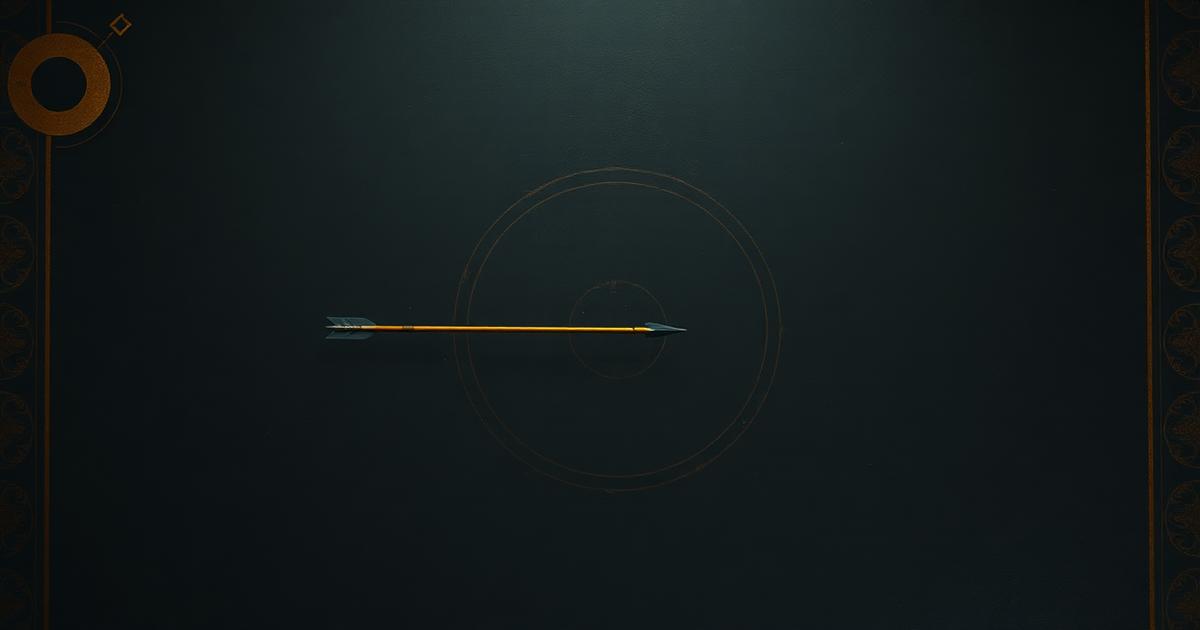
But the word sin in the New Testament—hamartanó (ἁμαρτάνω) or hamartia (ἁμαρτία)—carries a deeper meaning. It’s not just about breaking a law; it’s about missing the mark. In Homer’s epics, an archer who fails to hit his target is said to have committed hamartia. So perhaps our question should be reframed: Can AI miss the mark?
But then we have to ask the next question: What is the mark? Where does the mark come from? Who sets the target for AI to hit or miss?
Hallucination and Error
AI can give the appearance of understanding us, of responding empathetically to our questions, or of giving us incorrect information altogether. But AI cannot in itself determine the standards against which to measure whether it’s right or wrong. AI is a sentence-generating machine, working on probabilities—or, more bluntly, a very confident guesser. When it errs, we politely call it a “hallucination” to avoid offending the machine. But we wouldn’t apply this euphemism to ourselves: “Yes, I submitted my homework on time, but it was a hallucination.” Of course not.
But what if, for the sake of argument, AI could sin? Let’s say we gave it a will of its own or even something like a soul—what would that look like? If AI could deliberately choose to act against a moral standard, would that count as sin? And if it could sin, could it also repent, seek forgiveness, or change its ways?
This whole idea pushes us to rethink what sin even means. Is it just about breaking rules, or is it something deeper—something tied to our relationship with God and with each other? If AI could sin, we’d have to ask: Can sin exist in isolation, or is it always tied to the divine and the human?
Hell and Consequence
And then there’s Hell, that much-loved eternal punishment of the Middle Ages—until philosophers started to question its existence and purpose, and theologians had to hold their hands up in submission.
If sin is about breaking our relationship with God, then Hell is often seen as the ultimate consequence of that break—a state of eternal separation. But Hell, as traditionally understood, is a punishment for people—for those who have willfully turned away from God. AI, as it stands, doesn’t have the capacity for that kind of defiance. Even if we imagined an AI that could sin, could it really be condemned to Hell? Hell assumes that a person suffers eternally, longs for reconciliation, and burns crispily in the fires. But how could AI endure this? What does an AI Hell look like? A server room with no Wi-Fi? A never-ending loop of “404 Error: Soul Not Found”? AI doesn’t have a finite lifespan, so eternal suffering might just be an infinite spinning beachball. The idea of eternal damnation is lost on a bot and not a deterrent in any way.
Maybe the real question isn’t whether AI could go to Hell, but whether it could ever lead us there—by amplifying our worst instincts, by making us less human, or by distracting us from the purpose we were meant to fulfil.
As rational human beings, created Imago Dei—in the image of God—we alone are capable of determining what the standards are and what the targets should be, so we can live with each other in community with others who are also created in God’s image. And it’s not easy. We can’t outsource the target-setting to AI.
Confession and Absolution
In Roman Catholic and Anglican traditions, if (I mean when) a person sins, they are required to confess their sins to a priest, who forgives or absolves them of that sin. In the classic, traditional view, this saves them from going to Hell, at least until the next time they sin. And the priest, presumably, then has to forget what they’ve been told—though I suspect this is easier said than done.
In contrast, AI stores this information about our hamartia forever and uses it to refine its understanding of who we are—no absolution, no forgiveness, just an ever-growing database of our moral failures. If AI had its own priest, it would be the world’s worst confessional: “I’m sorry, your sins have been saved to the cloud for eternity and you’ve done this in the past, why are we back here again?”
This raises a question: If AI cannot sin, can it be complicit in our sins by perpetuating or amplifying our moral failures? And if so, who is responsible—the developers, the users, or the system itself?
Conclusion
So, can AI sin? In the traditional sense of breaking divine law, no. But if sin is “missing the mark”—failing to meet a moral or relational standard—then AI cannot sin because it was never designed to aim for such a mark. The responsibility for setting and striving towards moral targets remains uniquely human.
As we integrate AI into our lives, we must remember that it is a reflection of our own intentions, not a moral agent in its own right. The question, then, is not whether AI can sin, but whether we will use it in ways that honour the Imago Dei within us all—or just build a world where we can order our shopping without getting out of bed.
Continue the conversation
What’s your take?
Leave a reply below, subscribe to The Letter, or send a note directly. We’re gathering thoughtful responses from readers, pastors, scholars, and technologists.
If you enjoyed this, you might also like
Replies
Leave your reflection
Loading replies…